Start with the line Warner is measuring
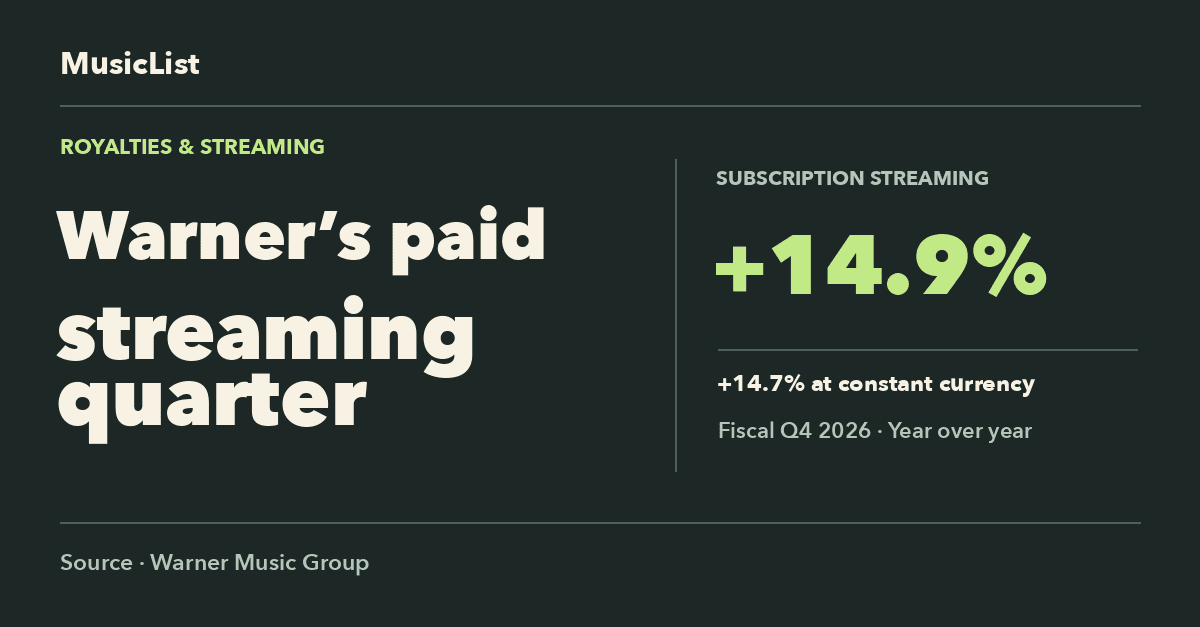
Music Business Worldwide reported $804 million in quarterly recorded music subscription revenue. Warner’s release gives paid subscriptions and ad-supported revenue separate growth figures, and it reports music publishing separately. The 14.9% figure compares global recorded music subscription revenue with the same quarter a year earlier. To learn whether your own receipts changed, you need the payment statement for your recordings and the period it covers.[3][1][2]
The same release contains a useful example of why timing matters. In the full-year publishing comparison, Warner said the previous year included $17 million in historical matched royalties processed by The Mechanical Licensing Collective. Warner reported 13% growth in full-year publishing streaming revenue and 15.5% after excluding that prior-year amount from the comparison. Keep that annual publishing comparison separate from the quarterly recorded music number.[1]
Compare the activity dates on your statements
Download two complete statements from your label or distributor. If the export gives you the fields, filter both for the same services, usage markets and types of streaming. Use the period when the music was played rather than the month the money arrived. Keep any corrections or late reports on their own line while you work out what belongs to each period.
Suppose your current deposit includes $780 credited to streams in the target quarter and a $150 adjustment for older activity. Your bank received $930. For a comparison of current-quarter earnings, put $780 in the current period and track the $150 against the older period. If your provider gives you only a payment date, ask which usage months the deposit covers before treating it as recurring.
Check who handles the songwriting side
Your sound recording and the underlying song can have different payment paths. In the U.S., The MLC administers the blanket license for eligible digital audio mechanical uses and pays eligible rightsholders after matching usage. Find out whether a publisher or administrator already handles your share, and keep that information with your distributor statement. The MLC says on-demand mechanical royalties depend on multiple inputs, including service revenue and subscriber counts.[4][2]
Save the reporting period and payment date on each export. Make comparisons with the same market, service and revenue type when the data allows.
Flag older adjustments separately. Ask your distributor to identify the original usage period if it’s missing.
Check which party handles your recording income and which party administers your composition share. Review any missing registrations before assuming a statement reflects all earnings.[4]
MusicList
Your music belongs here.
Artists, musicians and music-industry professionals: claim your free profile to unlock smartlinks, a shareable press kit, and direct booking inquiries.
Find my profile